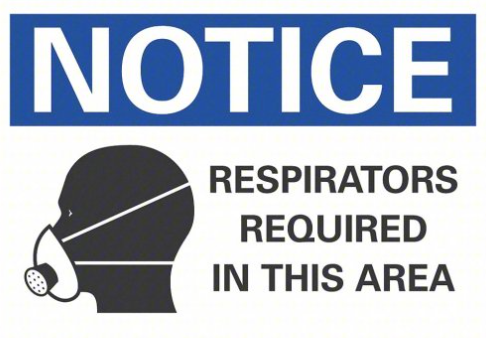
Throughout the College of Engineering campus, respirators may be required or recommended to protect the health of researchers from hazardous conditions. The following information on this webpage is a broad overview of respirators and some of the key information regarding their use an applicability on campus. For further training, please visit: Respirator Training
Types of Respirators
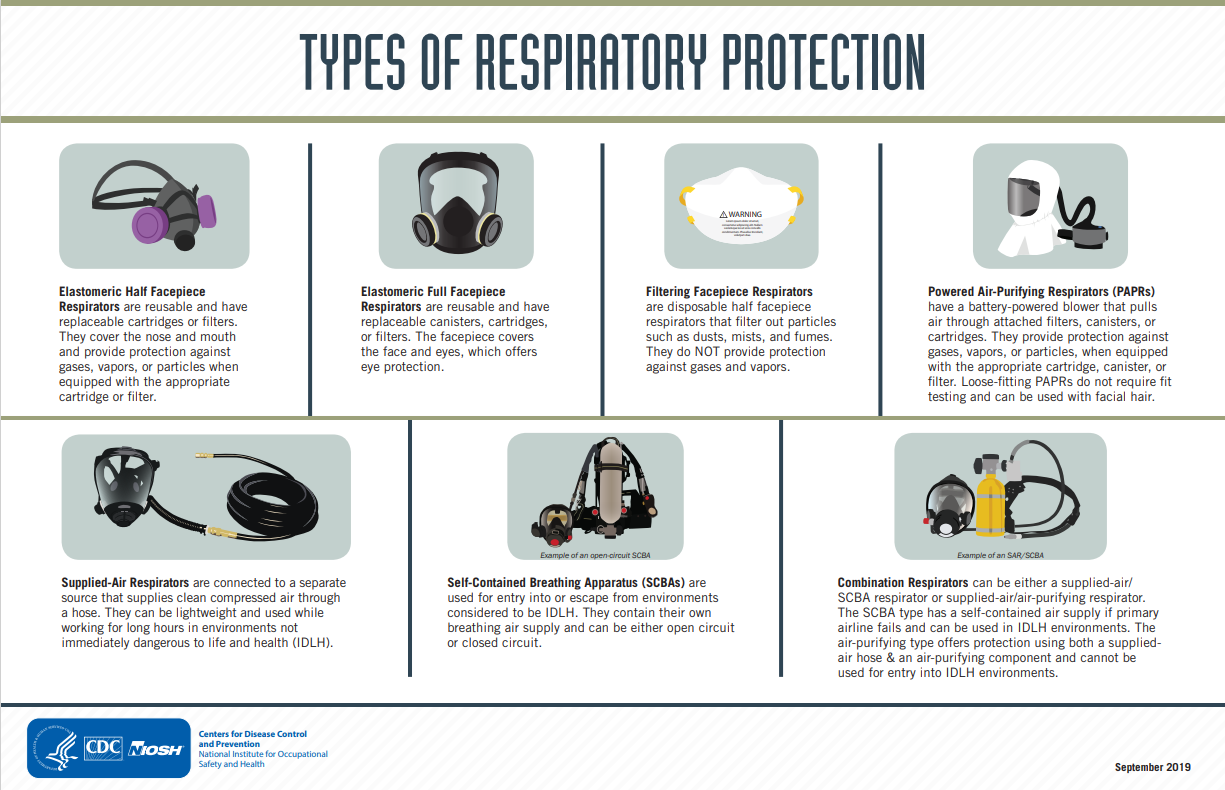
In general, there are two main types of respirators; air-purifying respirators (APRs) and atmosphere-supplying respirators (ASRs).
Air-purifying respirators (APRs): APRs use filters, cartridges, or canisters to remove gases, vapors, aerosols, or a combination of contaminants from the air. Tight-fitting APRs require fit testing prior to use. Below are the different types of APRs
- Filtering facepiece respirator
- Half mask respirator
- Full facepiece respirator
- Powered air-purifying respirator (PAPR)
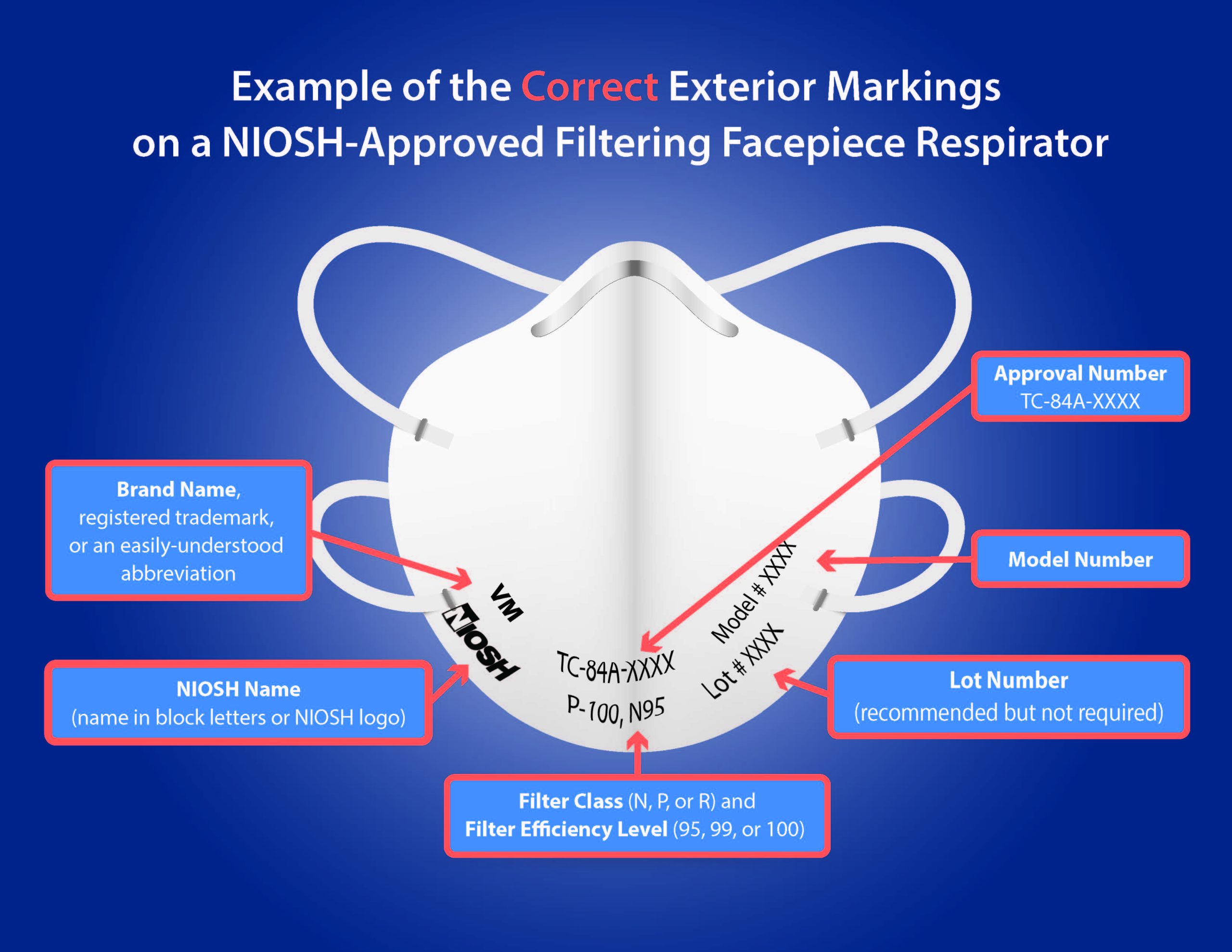
Some filters may contain an N, R, or P. These stand for:
- N for Not resistant to oil,
- R for Resistant to oil
- P for oil Proof
Atmosphere-supplying respirators (ASRs): ASRs provide clean breathing air from a separate source. These respirators protect workers from many types of airborne contaminants (particles, gases, and vapors) and, in certain cases, oxygen-deficient atmospheres. Tight-fitting ASRs require fit testing prior to use. Below are the different types of ASRs.
- Supplied air respirators (SAR)
- Self-contained breathing apparatus (SCBA)
- Combination SAR/SCBA apparatus
Filter/Cartridge Selection
It is imperative that the correct filter or cartridge is selected for the hazards the user will be subject to. With many to choose from, each offering a different mode of protection, it can difficult to pick the right one. Filters and cartridges have a service life and thus need to be changed regularly to maintain their effectiveness. If you have any hesitation as to the correct one to select, please reach out to CoE Safety for assistance. Below are resources that may aid in selecting an appropriate filter/cartridge.
Fit Testing
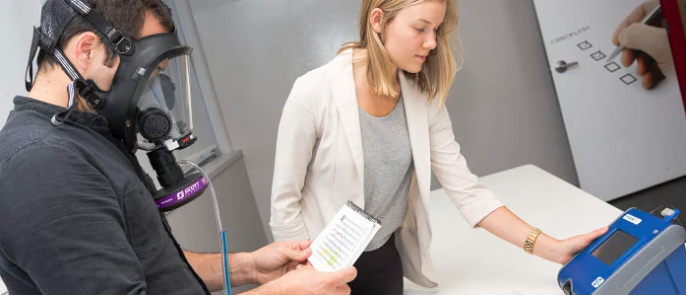
Prior to using a respirator of N95 or higher protection level, students and/or researchers must first complete a Respirator Fit Test, which is conducted by Occupational Medicine. This is provided at no cost to the individual, and ensures that the user is able to properly seat and maintain the seal of the respirator on their face. To book an appointment to complete fit testing click here: Respirator Fit Testing – Occupational Medicine
NOTE: Requirements for Appointments
- Do not smoke within 15 minutes within scheduled appointment.
- Be clean shaven (no beard growth) at your appointment.
Respirator Maintenance
Inspection
Prior to the use of a respirator, an inspection of the components should be conducted in an effort to identify any potential deficiencies and/or damage that could cause the respirator to not function properly.
Below are some of the areas to inspect:
- Face piece
- No cracks, tears, or holes
- No facemask distortion
- No cracked or loose lenses or shields
- Head straps
- No breaks or tears
- No damaged buckles
- Filters/Cartridges
- Approved by NIOSH
- Properly seated gaskets
- No cracks or dents
- Properly selected cartridge for hazards at hand
- Air supply systems
- Supply hoses in good condition
- Hoses properly connected
- Correct valve and regulator settings
Storage
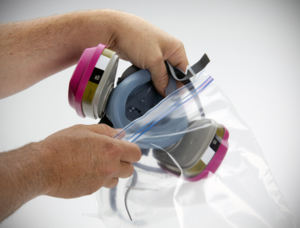
Respirators should be stored in plastic bags or boxes, and not on floors or other areas where they may be subject to dirt or damage which could cause them not to function properly.
Additional Resources
- UW Full-half Face Respirator Use and Care information
- UW N95 Respirator Use and Care Information
- Use of face coverings and disposable masks (WHO)
- Respiratory Protection for Healthcare Workers (US Labor Dept)
- Respirator Use for employees (US Labor Dept)
- Helping you wear it right (3M)
- Cleaning reusable respirators (3M)